Business systems
Systems that give your business more ways to grow
I find where a business loses customers or time, and design the system that fixes it: the platform, the data, the apps and the website, as one structure.
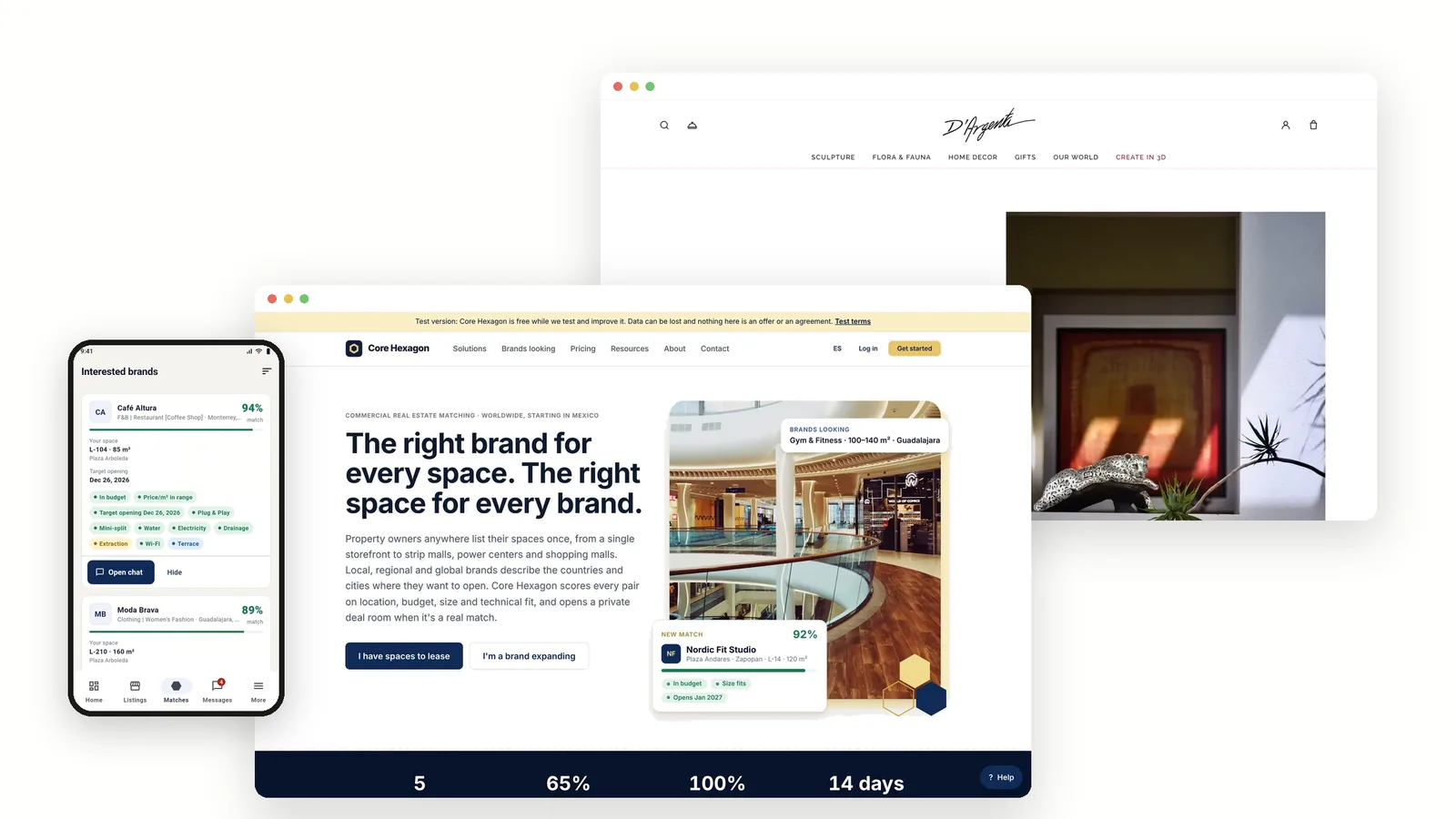
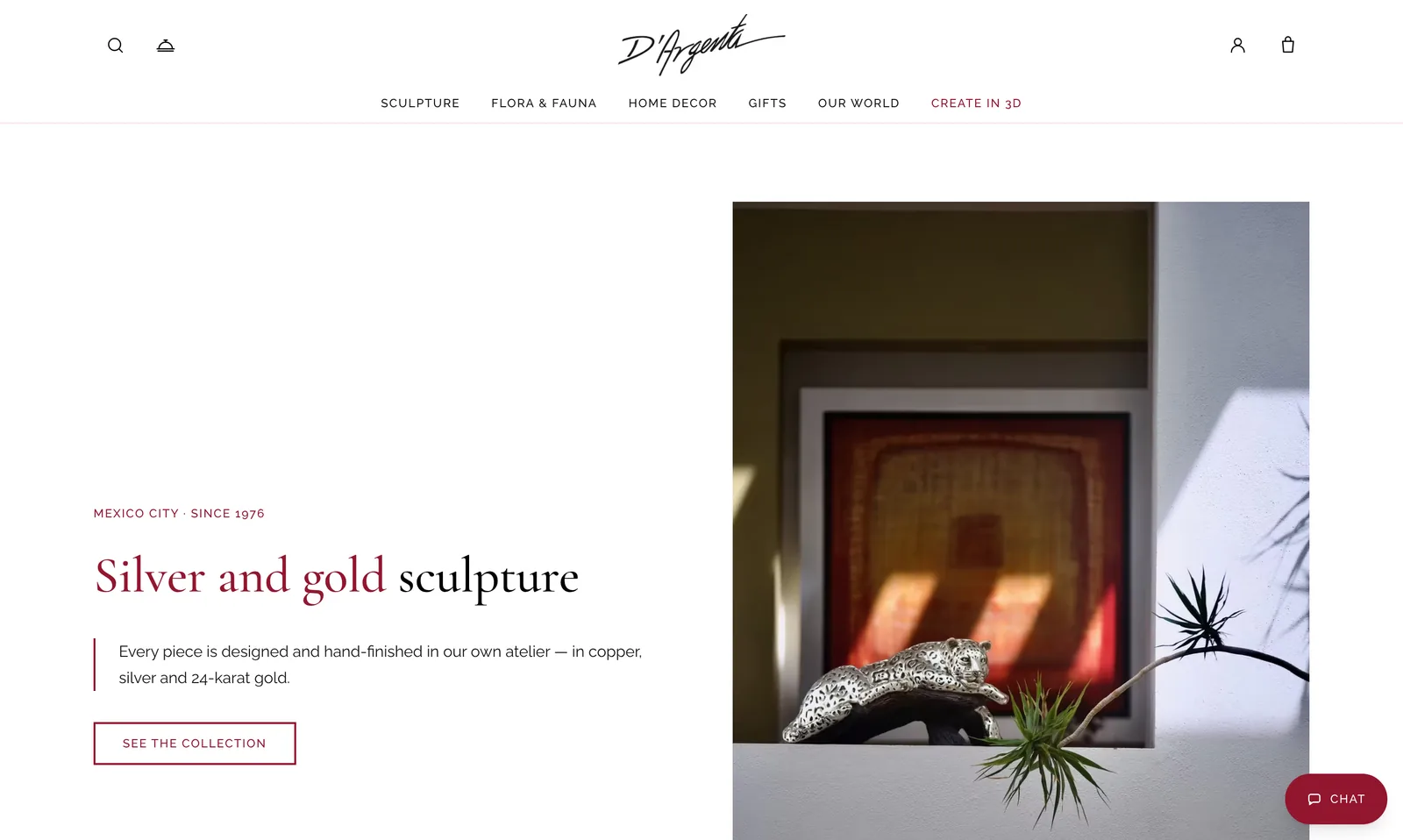
D'Argenta: from wholesale to selling directly
D'Argenta is a Mexico City house of sculpture finished in silver and gold, founded in 1976. As Chief Commercial Officer I lead its move from wholesale to selling directly to customers.
I designed and built what that move runs on: the online stores, the booking and enquiry routes, and the apps that customers and the team use.
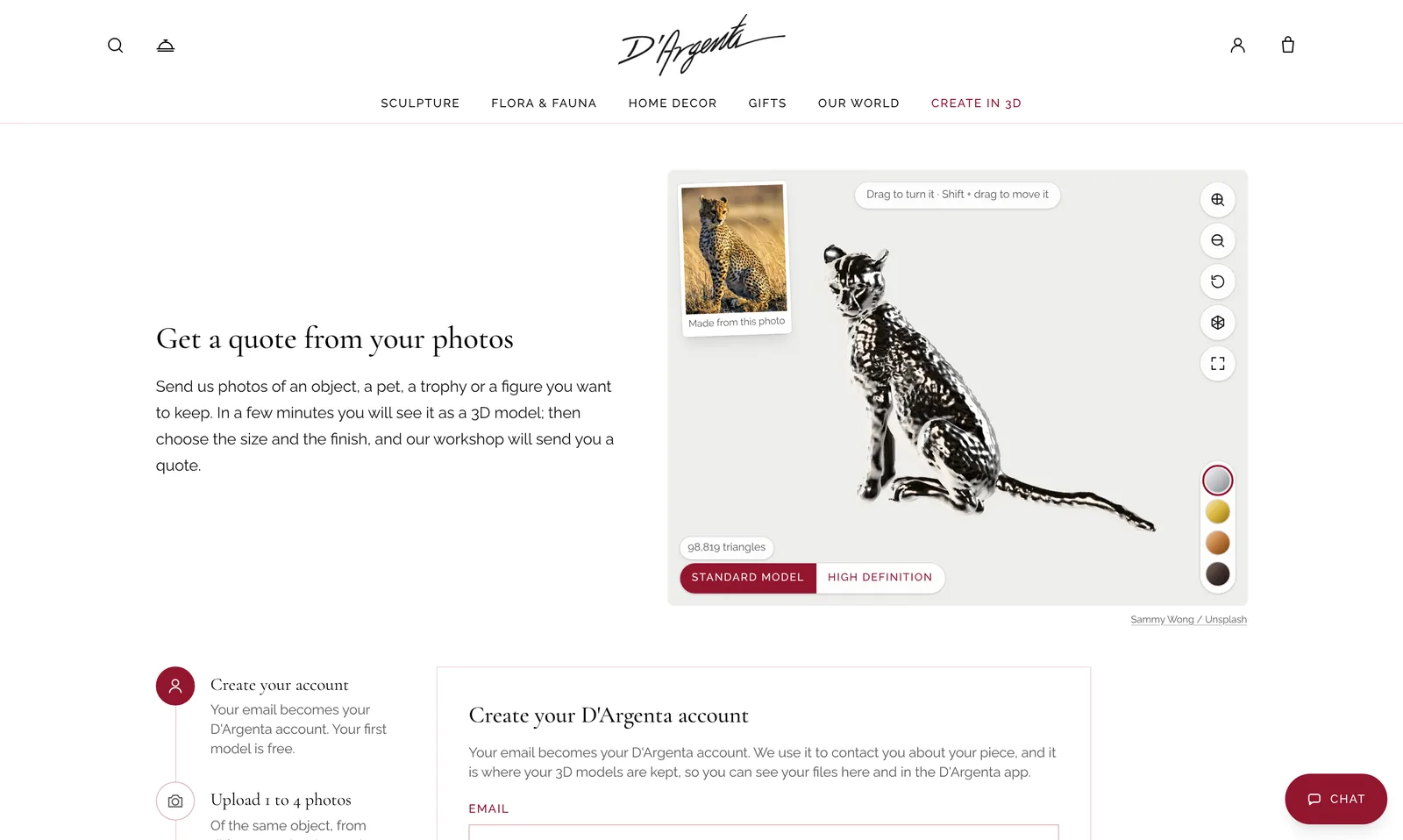
A photo becomes a quote
Commissioning a piece used to start with a long email thread. Now a customer uploads photos or describes the piece, turns the 3D model around on the screen, and sends it for a quote.
Behind that one page are the generator, permanent storage for every model, and the admin app where the team receives the request and answers.
What else runs underneath
- Languages and speed
- Server-rendered pages, and every language with its own addresses, titles and search listings. One of the sites is published in 32 languages.Before and after
- An admin app for the team
- On Mac and iPhone: every enquiry, quote and customer conversation from the websites in one place, with each device approved before it can sign in.
- Customer apps
- One app for Mexico and one for the rest of the world: the catalogue, the customer's 3D creations and their orders.
- Measured, with consent
- Analytics wait for the visitor's consent and follow the moments that matter: an enquiry sent, a booking made, a purchase.
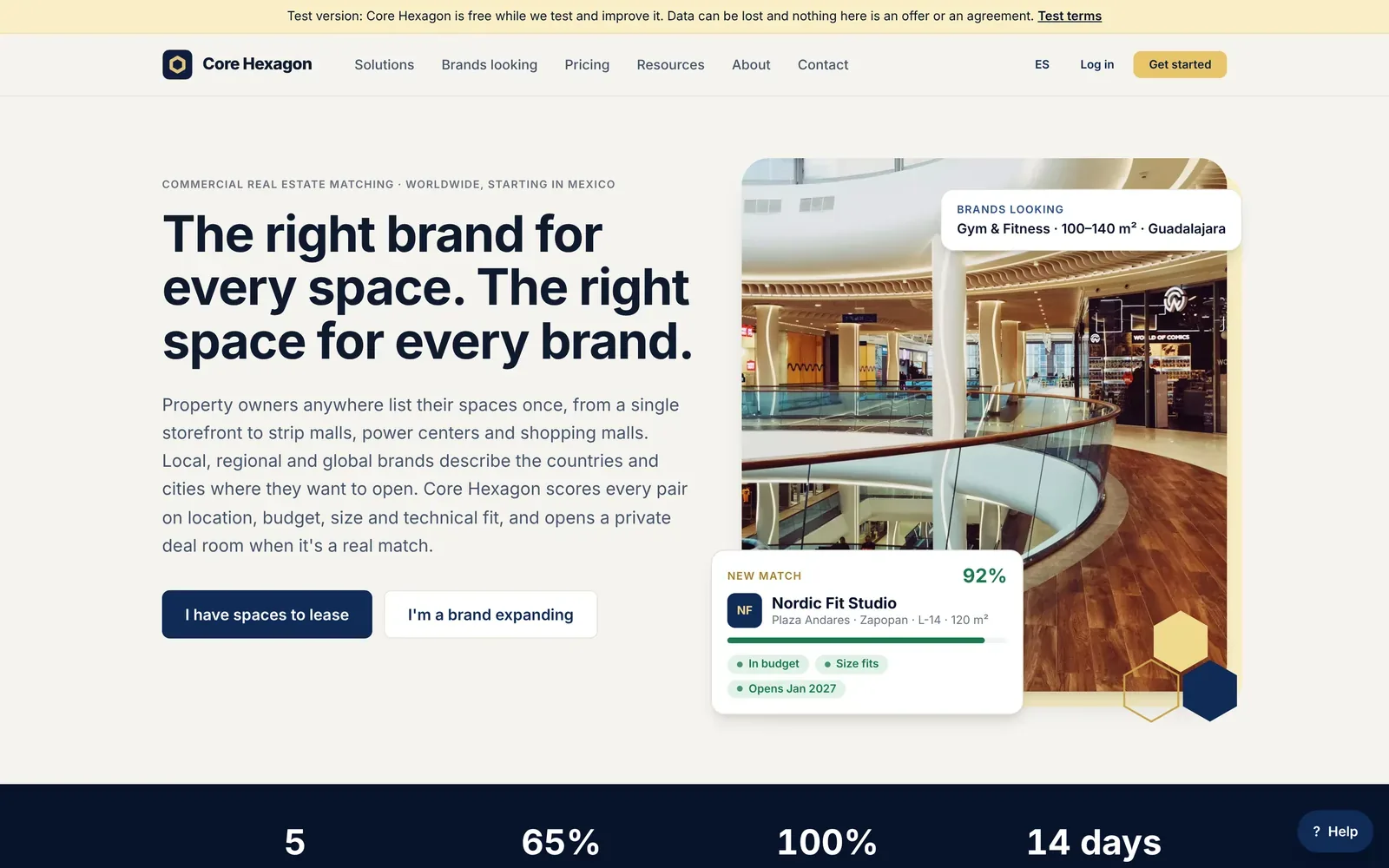
Core Hexagon: brands and retail space, matched
Core Hexagon is an international project I co-founded and build for. Property owners list their spaces once; brands describe where they want to open; the platform scores every pair on location, budget, size and technical fit, and opens a private deal room when it is a real match.
I lead its systems architecture: the public site, the member area, the floor-plan editor where owners trace each unit, and the apps.
The same platform as an app
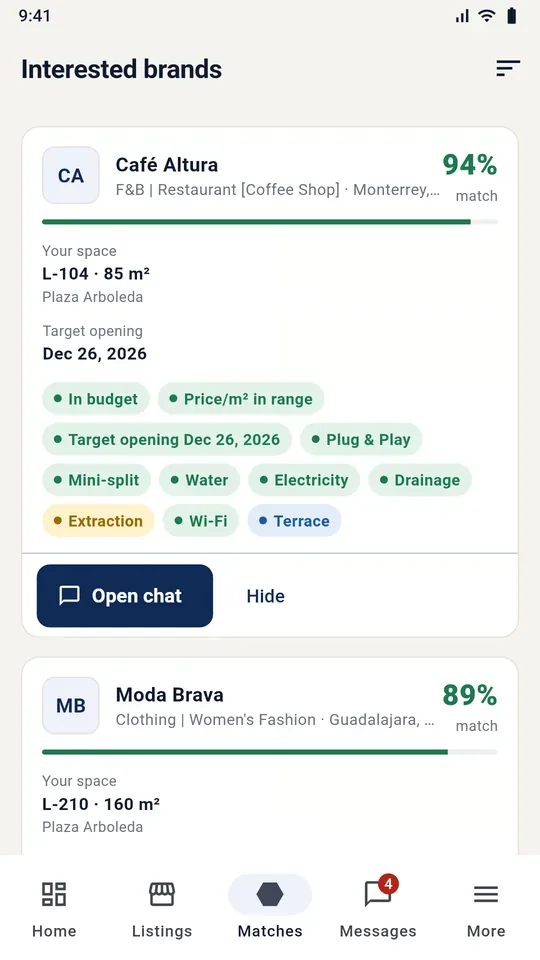
Matches, ranked 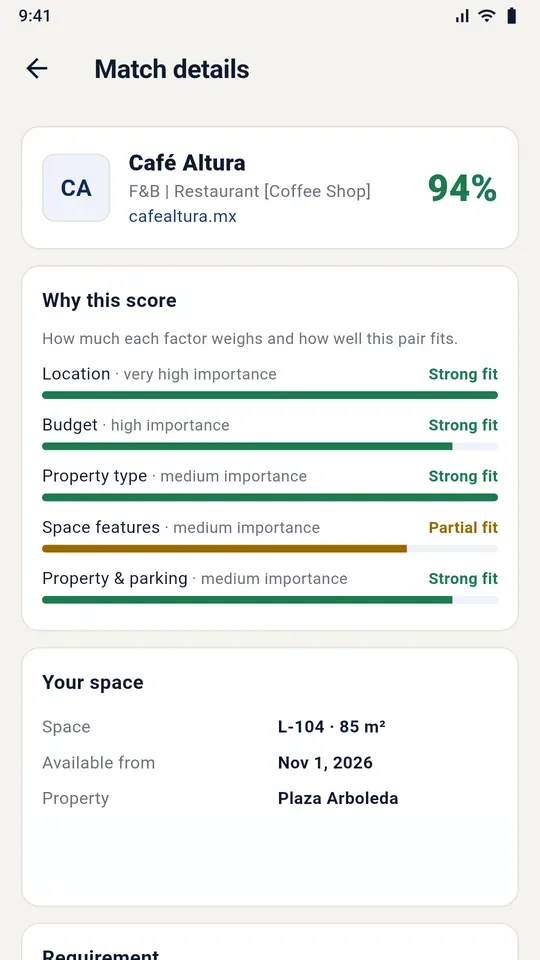
Why a pair fits 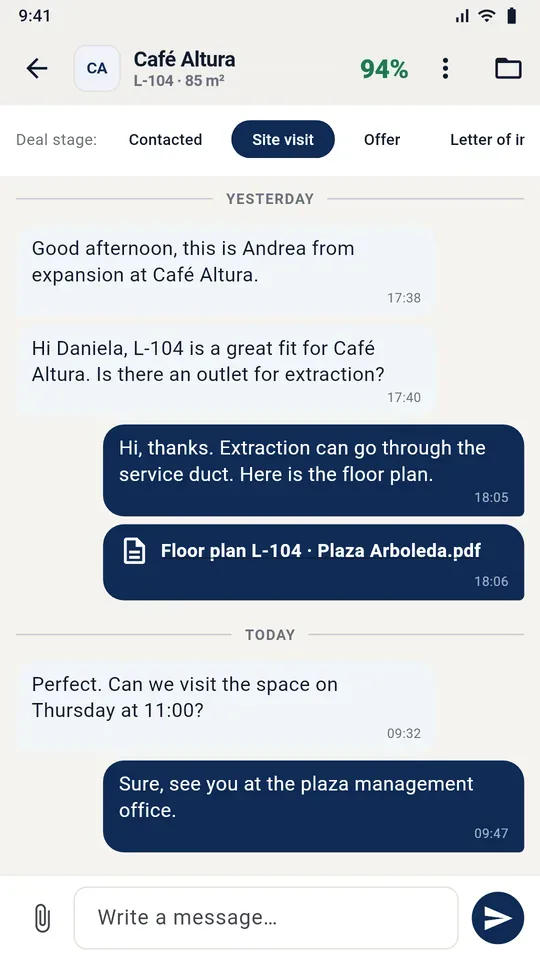
A private deal room
Core Hexagon member app, built in Flutter. The screens show demonstration data.
Does this sound like your business?
- You sell through others
- Stores and distributors stand between you and your customers. I design the store, the site and the routines for selling to them directly.
- Every quote is made by hand
- A customer's request becomes a model, a price and a record your team can act on.
- Two sides need to find each other
- Owners and tenants, buyers and sellers, people and offers: each side says what it needs and the system pairs them.
- You need more languages or countries
- One site in many languages, each with its own addresses, titles and search listings.
- The business lives in one person's head
- Apps where the team sees every enquiry, quote and customer in one place, so the work no longer depends on who is in the room.
- Your website is slow or hard to find
- Fast, server-rendered pages, with titles, descriptions and structured data written for each language.
How I think
I trained as an architect, and I still start the same way: understand how a place is used, and by whom, before drawing anything. A business is a building people move through.
So I look first for the step that costs the most time, the customer who is turned away, and the process that only works when one person is in the room. New business usually starts there.
Where the added value comes from
Joining things that were separate. A photo, an AI service, permanent storage, a team app and a quote were five jobs; connected, they are one product.
Designing the rules, not only the screens: who can talk to whom, when, and who pays.
Building so it can grow. A data model that a second market, a second language or a second product can use without starting again.
One engine, many markets
The idea behind Core Hexagon works wherever two groups look for each other: each side describes what it needs, the system scores every pair, and a private conversation opens when it fits.
I have reused that engine across several of my own projects, in different markets.
How a project runs
A conversation
You tell me how the business works today and where it hurts. I ask a lot of questions.
A map
I write down what I would build, in what order, and what I would leave alone. If it is not worth building, I say so.
A first working piece
The smallest part that proves the idea with real customers or real staff, not a presentation.
Then it grows
More markets, more languages, more products, on the same structure.
Ways to work together
Websites: a partnership, where I design your e-commerce or services website for free, take a commission on its success and become part of your team, or a fixed-scope project.
Systems beyond a website start with a conversation. Tell me the problem and I'll say what I would build, and whether it is worth building.